In today’s fast-paced digital landscape, b2b marketing automation isn’t just a luxury—it’s a necessity. From streamlining lead nurturing to boosting conversion rates, automation empowers businesses to scale smarter and faster than ever before.
What Is B2B Marketing Automation and Why It Matters

B2B marketing automation refers to the use of software and technology to automate repetitive marketing tasks, streamline workflows, and deliver personalized content to business buyers at scale. Unlike B2C marketing, which often targets individual consumers with emotional triggers, B2B marketing automation focuses on longer sales cycles, multiple decision-makers, and data-driven engagement.





Defining B2B Marketing Automation
At its core, b2b marketing automation involves tools that help marketers manage campaigns across multiple channels—email, social media, webinars, and more—without manual intervention at every step. These platforms track user behavior, score leads based on engagement, and trigger actions like sending follow-up emails or notifying sales teams when a prospect is sales-ready.
- Automates lead generation, scoring, and nurturing
- Integrates with CRM systems like Salesforce or HubSpot
- Enables personalized, timely communication at scale
“Marketing automation is not about replacing humans; it’s about empowering them with data and efficiency.” — Ann Handley, Chief Content Officer at MarketingProfs
Why B2B Marketing Automation Is Essential
The complexity of B2B sales cycles demands precision and consistency. With an average of 6-10 decision-makers involved in a single purchase, companies can’t afford inconsistent messaging or delayed follow-ups. B2b marketing automation ensures that every touchpoint is optimized, tracked, and aligned with the buyer’s journey.
- Reduces manual workload by up to 40% (Source: MarketingProfs)
- Increases qualified leads by 45% on average
- Improves sales and marketing alignment
Key Benefits of B2B Marketing Automation
Implementing b2b marketing automation offers tangible ROI across departments. From accelerating lead conversion to enhancing customer retention, the benefits are both strategic and operational.
Improved Lead Nurturing and Conversion Rates
One of the most powerful advantages of b2b marketing automation is its ability to nurture leads over time. Instead of relying on one-off emails or cold calls, automated workflows guide prospects through a structured journey based on their behavior.
- Drip email campaigns deliver relevant content over days or weeks
- Behavioral triggers send targeted messages after website visits or content downloads
- Lead scoring identifies high-intent prospects for immediate sales outreach
According to HubSpot, companies using lead nurturing see a 45% increase in lead generation ROI.
Enhanced Sales and Marketing Alignment
One of the biggest challenges in B2B organizations is the gap between sales and marketing teams. B2b marketing automation bridges this divide by providing shared visibility into lead status, engagement levels, and campaign performance.
- Service-level agreements (SLAs) define how marketing delivers qualified leads to sales
- Shared dashboards show real-time lead progression
- Automated alerts notify sales reps when a lead reaches a predefined threshold
“When sales and marketing are aligned, companies grow revenue 2–3x faster.” — SiriusDecisions
Scalability and Operational Efficiency
As businesses grow, manually managing thousands of leads becomes unsustainable. B2b marketing automation allows companies to scale their outreach without proportionally increasing headcount.
- One campaign can reach thousands of contacts with personalized variations
- Time saved on repetitive tasks can be redirected to strategy and creativity
- Global teams can run coordinated campaigns across regions
A study by Gartner found that organizations using automation report a 14.5% increase in sales productivity.
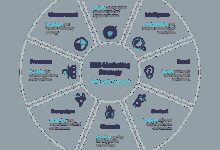
Core Components of a B2B Marketing Automation Strategy
A successful b2b marketing automation strategy isn’t just about buying software—it’s about integrating people, processes, and technology into a cohesive system.
Lead Management and Scoring
Effective lead management starts with capturing leads from various sources—landing pages, webinars, whitepapers—and organizing them in a centralized database. Lead scoring assigns points based on demographic fit and behavioral engagement.
- Demographic scoring: job title, company size, industry
- Behavioral scoring: email opens, page visits, content downloads
- Negative scoring: unsubscribes or inactivity penalize lead score
When a lead reaches a predefined score, it’s automatically routed to sales. This ensures only the most qualified prospects enter the sales funnel.
Email Campaign Automation
Email remains one of the highest ROI channels in B2B marketing. Automation enables segmentation, personalization, and timing optimization to maximize open and click-through rates.
- Segmentation by industry, role, or engagement level
- Dynamic content that changes based on user data
- A/B testing subject lines, CTAs, and send times
Tools like Mailchimp and ActiveCampaign offer robust automation features tailored for B2B use cases.
CRM Integration and Data Synchronization
The true power of b2b marketing automation is unlocked when it’s tightly integrated with a CRM system. This creates a single source of truth for customer interactions, ensuring seamless handoffs between marketing and sales.
- Synchronize contact data in real time
- Track lead status changes from “marketing qualified” to “sales accepted”
- Enable closed-loop reporting to measure campaign impact on revenue
Platforms like Salesforce and Zoho CRM offer native integrations with major marketing automation tools.
Top B2B Marketing Automation Tools in 2025
Choosing the right tool is critical to the success of your b2b marketing automation efforts. The market is crowded, but several platforms stand out for their functionality, ease of use, and scalability.
HubSpot: All-in-One Marketing Hub
HubSpot is one of the most popular b2b marketing automation platforms, known for its user-friendly interface and comprehensive suite of tools.
- Free CRM integration
- Drag-and-drop workflow builder
- Advanced analytics and reporting
It’s ideal for mid-sized businesses looking to scale their marketing operations. Learn more at hubspot.com.
Marketo: Enterprise-Grade Power
Marketo, now part of Adobe, is a powerhouse for large enterprises with complex marketing needs.
- Advanced segmentation and personalization
- AI-driven recommendations for content and timing
- Robust API for custom integrations
Marketo excels in handling high-volume campaigns and multi-touch attribution. Visit marketo.com for details.
Pardot: Salesforce’s B2B Automation Engine
Pardot is Salesforce’s native marketing automation solution, making it a top choice for companies already using the Salesforce ecosystem.
- Tight two-way sync with Salesforce CRM
- B2B-specific features like account-based marketing (ABM)
- Lead grading based on firmographic data
Pardot is particularly strong in ABM strategies and sales alignment. Explore it at pardot.com.
How to Build a Successful B2B Marketing Automation Workflow
A well-designed workflow is the backbone of effective b2b marketing automation. It ensures that the right message reaches the right person at the right time.
Mapping the Buyer’s Journey
Before building any automation, you must understand the stages your buyers go through: awareness, consideration, and decision.
- Awareness stage: Educational content like blogs, infographics, and webinars
- Consideration stage: Comparison guides, case studies, and product overviews
- Decision stage: Free trials, demos, and pricing sheets
Each stage should have dedicated automated campaigns that guide prospects forward.
Designing Multi-Channel Campaigns
Modern buyers interact across multiple channels. A successful b2b marketing automation strategy must be omnichannel.
- Email sequences complemented by LinkedIn ads
- Retargeting website visitors with personalized ads
- Social media automation for consistent brand presence
Tools like Hootsuite and LinkedIn Campaign Manager integrate with marketing automation platforms to create cohesive cross-channel experiences.
Setting Up Triggers and Actions
Automation workflows rely on triggers (events) and actions (responses). For example:
- Trigger: Prospect downloads a whitepaper → Action: Add to nurture sequence
- Trigger: Visits pricing page twice → Action: Notify sales rep
- Trigger: Attends webinar → Action: Send follow-up email with recording and CTA
These rules create a responsive marketing system that adapts to user behavior in real time.
Measuring the ROI of B2B Marketing Automation
Investing in b2b marketing automation requires justification. Measuring ROI involves tracking both quantitative metrics and qualitative improvements.
Key Performance Indicators (KPIs)
To evaluate success, focus on KPIs that reflect business outcomes, not just activity.
- Lead-to-customer conversion rate
- Cost per lead (CPL)
- Customer acquisition cost (CAC)
- Marketing-qualified leads (MQLs) accepted by sales
- Revenue influenced by marketing
According to CMO.com, companies that track marketing ROI see 19% higher revenue growth.
Closed-Loop Reporting
Closed-loop reporting connects marketing activities directly to sales outcomes. It answers the critical question: Which campaigns actually drove revenue?
- Track leads from first touch to closed deal
- Attribute revenue to specific channels and campaigns
- Identify underperforming assets for optimization
This level of insight allows for data-driven budget allocation and strategy refinement.
Calculating Financial ROI
The financial ROI of b2b marketing automation can be calculated using this formula:
(Revenue Attributed to Automation – Cost of Automation) / Cost of Automation
For example, if automation drives $500,000 in revenue and costs $100,000 annually, the ROI is 400%. Most companies see payback within 6–12 months.
Common Challenges and How to Overcome Them
Despite its benefits, b2b marketing automation comes with challenges. Recognizing and addressing them early is key to long-term success.
Data Quality and Management
Poor data quality is the #1 reason automation fails. Duplicate records, outdated emails, and incomplete profiles lead to broken workflows and low engagement.
- Implement regular data cleansing processes
- Use double opt-in forms to ensure email validity
- Enrich data with tools like Clearbit or ZoomInfo
High-quality data ensures your automation runs smoothly and delivers relevant messages.
Over-Automation and Lack of Personalization
While automation saves time, overdoing it can make your brand feel robotic. Buyers expect personalization, not generic blasts.
- Use dynamic content blocks that change based on user data
- Segment audiences beyond basic demographics (e.g., by pain points)
- Include human touches like personalized video messages
“Personalization is not a feature—it’s a customer expectation.” — Paul Roetzer, Founder of Marketing AI Institute
Change Management and Team Adoption
Introducing b2b marketing automation often requires cultural change. Teams may resist new tools or processes.
- Provide comprehensive training and onboarding
- Start with small, high-impact campaigns to prove value
- Appoint automation champions within the team
Gradual adoption with clear communication increases buy-in and long-term success.
Future Trends in B2B Marketing Automation
The landscape of b2b marketing automation is evolving rapidly, driven by AI, data privacy changes, and shifting buyer expectations.
AI and Predictive Analytics
Artificial intelligence is transforming automation from reactive to predictive. AI can now forecast which leads are most likely to convert, recommend optimal send times, and even generate content.
- Predictive lead scoring uses machine learning to improve accuracy
- AI-powered chatbots qualify leads 24/7
- Natural language generation (NLG) creates personalized email copy
Platforms like Salesfusion and InsideSales are leading the charge in AI-driven automation.
Account-Based Marketing (ABM) Integration
ABM is becoming a core component of b2b marketing automation. Instead of targeting individuals, ABM focuses on entire accounts with coordinated, multi-channel campaigns.
- Identify target accounts using firmographic and technographic data
- Launch personalized campaigns across email, ads, and direct mail
- Measure engagement at the account level, not just individual leads
Tools like Terminus and Demandbase specialize in ABM automation.
Privacy-First Automation
With regulations like GDPR and CCPA, and the deprecation of third-party cookies, b2b marketing automation must adapt to a privacy-first world.
- Focus on first-party data collection through gated content
- Obtain explicit consent for email communications
- Use zero-party data (information customers willingly share)
The future belongs to brands that build trust through transparency and value exchange.
What is b2b marketing automation?
B2B marketing automation is the use of software to automate repetitive marketing tasks such as email campaigns, lead scoring, and social media posting, specifically tailored for business-to-business sales cycles. It helps companies nurture leads, improve sales alignment, and scale their marketing efforts efficiently.
What are the best b2b marketing automation tools?
Top tools include HubSpot for all-in-one marketing, Marketo for enterprise scalability, Pardot for Salesforce integration, and ActiveCampaign for advanced workflows. The best choice depends on your business size, tech stack, and marketing goals.
How does b2b marketing automation improve lead conversion?
It improves conversion by delivering timely, personalized content based on user behavior, scoring leads to prioritize sales efforts, and nurturing prospects through automated email sequences that guide them toward a purchase decision.
Can small businesses benefit from b2b marketing automation?
Absolutely. Many platforms offer scalable pricing and starter plans. Even small teams can automate lead capture, follow-ups, and reporting to compete with larger organizations and grow efficiently.
What is the future of b2b marketing automation?
The future includes AI-driven personalization, deeper account-based marketing integration, and privacy-compliant strategies. Automation will become more intelligent, predictive, and focused on delivering value while respecting user data rights.
B2B marketing automation is no longer optional—it’s a strategic imperative. From enhancing lead nurturing to enabling data-driven decision-making, it empowers businesses to operate with greater efficiency and impact. By understanding its components, leveraging the right tools, and staying ahead of trends like AI and ABM, companies can unlock unprecedented growth. The key is to start with a clear strategy, maintain high data quality, and continuously optimize based on performance. Whether you’re a startup or an enterprise, embracing b2b marketing automation is the first step toward a smarter, more scalable future.
Further Reading: